

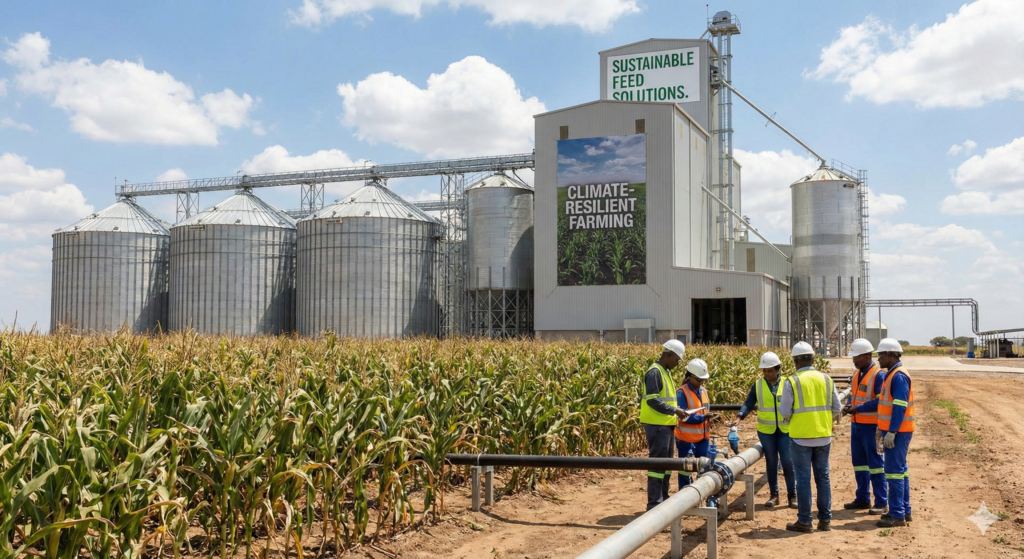
Climate change is no longer a distant threat; for the agricultural sector, it is a daily reality. As weather patterns shift, bringing more frequent droughts, unpredictable floods, and rising temperatures, the production of corn feed – the backbone of the global livestock industry—faces unprecedented challenges. Corn is a resource-intensive crop, traditionally requiring significant water and stable temperatures to thrive.
However, the agricultural industry is not standing still. From geneticists to farmers, the sector is innovating rapidly to ensure that corn feed production remains stable and sustainable. This adaptation is not just about survival; it is about evolving the way we farm to secure the food supply chain for generations to come. This article explores the cutting-edge strategies transforming corn feed production in the face of a warming planet.
The Rise of Drought-Tolerant Genetics
The first line of defense against climate change lies within the seed itself. Plant breeders and geneticists are racing to develop corn varieties that can withstand extreme heat and water scarcity without sacrificing yield.
Traditionally, when corn experiences water stress, its leaves curl to conserve moisture, photosynthesis slows, and kernel development halts. New “climate-smart” hybrids are being engineered to maintain cellular function even during dry spells.
- Deep Root Systems: New varieties are bred with deeper, more robust root architectures that can tap into moisture reserves found lower in the soil profile.
- Stomata Control: Genetic improvements allow plants to better regulate their stomata (pores on the leaves), reducing water loss through transpiration while continuing to grow.
- Short-Season Hybrids: In areas where late-season droughts are becoming common, farmers are switching to shorter-season varieties that mature faster, allowing harvest before the harshest weather arrives.
Precision Agriculture and Water Management
If genetics is the hardware, precision agriculture is the software. Technology is allowing farmers to do more with less, optimizing every drop of water and pound of fertilizer.
- Variable Rate Irrigation (VRI): Instead of watering a whole field uniformly, VRI systems use data from soil sensors and satellite imagery to apply water only where it is needed. This prevents water waste and reduces the energy cost of pumping.
- Soil Moisture Sensors: Real-time data from probes buried in the root zone tells farmers the exact hydration level of their crop, eliminating guesswork.
- Drones and AI: Drones equipped with multispectral cameras fly over fields to detect early signs of stress—be it heat, pest, or nutrient deficiency—before they are visible to the human eye. This allows for targeted interventions rather than blanket treatments.
Regenerative Soil Practices
Adapting to climate change also means healing the land. Healthy soil is a sponge; it holds water during droughts and drains better during floods. Corn feed producers are increasingly adopting regenerative practices to build soil resilience.
- No-Till Farming: By not plowing the land, farmers leave crop residue on the surface. This acts as a mulch, keeping the soil cool, retaining moisture, and preventing erosion during heavy rains.
- Cover Cropping: Planting crops like rye or clover during the off-season keeps living roots in the soil year-round. This builds organic matter, sequesters carbon, and improves the soil’s water-holding capacity.
- Nutrient Stewardship: Climate change can alter how plants uptake nutrients. Farmers are using “smart fertilizers” with stabilizers that prevent nitrogen from leaching into groundwater during heavy rains or volatilizing into the air as greenhouse gases.
Diversification of Feed Sources
While corn remains king, adaptation also involves diversification. To mitigate risk, feed producers are looking at blending corn with other, more hardy crops.
- Sorghum Integration: Sorghum is significantly more drought-tolerant than corn. In the hottest regions, producers are increasing the ratio of sorghum in livestock feed formulations to reduce dependency on water-intensive corn crops.
- Byproduct Utilization: Increasing the use of Distillers Dried Grains with Solubles (DDGS)—a byproduct of ethanol production—ensures that every part of the corn kernel is utilized, maximizing the caloric output per acre of land used.
Conclusion
The adaptation of corn feed production to climate change is a multifaceted effort involving biology, technology, and agronomy. While the challenges of a warming climate are immense, the resilience of the agricultural community is greater. Through the adoption of drought-tolerant genetics, precision water management, and soil-regenerating practices, the industry is not only protecting the current supply chain but paving the way for a more sustainable and efficient future in farming.