

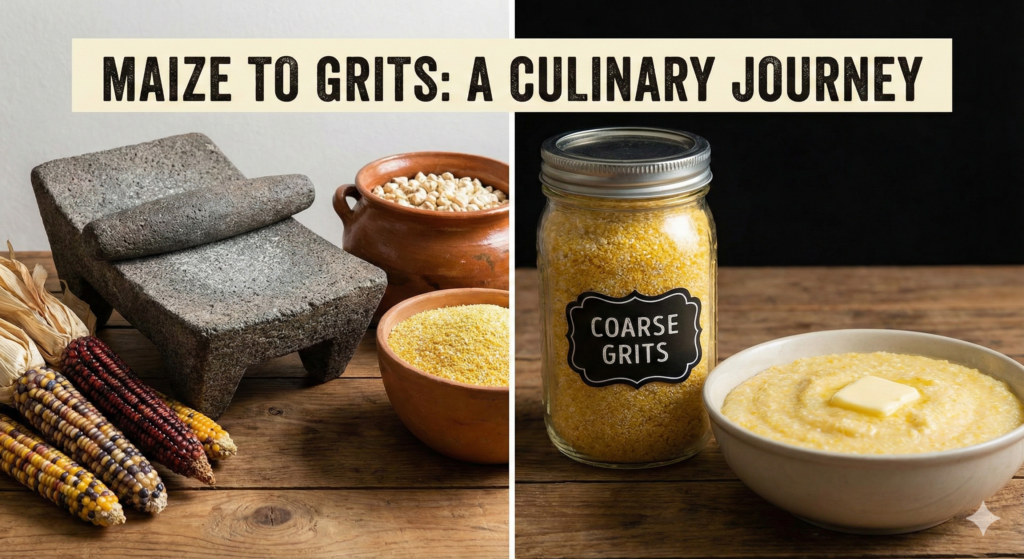
To the uninitiated, grits might seem like simple corn porridge. But true Southern grits—and their cousins, hominy and masa—are the result of a sophisticated chemical process invented thousands of years ago by the indigenous people of Mesoamerica.
This process is called Nixtamalization. It is the difference between a bland bowl of cornmeal mush and the rich, floral, nutritious dish served in high-end restaurants today. Understanding this ancient technique reveals why “instant grits” can never compare to the real thing, and how a simple chemical reaction changed the course of civilization.
What is Nixtamalization?
The word comes from the Aztec language Nahuatl: nextli (ashes) and tamalli (corn dough).
In simple terms, it involves cooking and soaking dried corn kernels in an alkaline solution, usually water mixed with slaked lime (calcium hydroxide) or wood ash. This isn’t just about cooking the corn; it’s about transforming it.
The Chemistry of the Kernel
When maize is treated with an alkali, several magical things happen on a molecular level:
- Hull Removal: The hemicellulose in the corn’s tough outer hull (pericarp) breaks down. This allows the hull to be easily washed away, making the corn easier to grind and smoother to eat.
- Nutritional Unlock: Untreated corn is rich in Niacin (Vitamin B3), but it is bound in a chemical complex that the human body cannot absorb. The alkaline solution breaks these bonds, making the Niacin bioavailable. This discovery literally saved civilizations from Pellagra, a disease caused by Vitamin B3 deficiency.
- Protein Bonding: The process alters the protein structure in the corn, allowing it to form a dough (masa) when ground. Without this, you cannot make tortillas; you only get crumbly cornmeal.
Flavor: The “Cornier” Corn
Beyond nutrition, nixtamalization profoundly affects flavor. The chemical reaction introduces calcium and creates new aromatic compounds. If you have ever smelled the distinct, earthy aroma of fresh corn tortillas or a pot of simmering hominy, you are smelling the results of nixtamalization. It makes corn taste more like corn—richer, nuttier, and more complex.
From Hominy to Grits
So, how does this relate to the grits on your breakfast plate?
- Hominy Grits: Traditional Southern grits were often made from corn that had been nixtamalized (becoming hominy), dried, and then ground. These are “Hominy Grits.” They have a chewy texture and that distinct alkaline flavor profile.
- Milling Matters: Modern industrial grits are often just dried, untreated corn that is steel-cut. They lack the depth of flavor and the nutritional benefits of the ancient method. However, the “Modern Artisan” movement is reviving stone-ground milling.
- Stone-Ground: Stone milling crushes the corn slowly, keeping the germ (the fatty, flavorful heart of the kernel) intact. When combined with heirloom corn varieties like Jimmy Red or Bloody Butcher, the result is a bowl of grits that is creamy, speckled, and intensely flavorful.
The Modern Revival
Today, chefs and millers are looking back to move forward. They are partnering with farmers to grow heirloom maize varieties that were nearly extinct. They are using traditional nixtamalization to create “blue corn grits” or “red corn hominy” that offer a spectrum of flavors previously lost to industrial standardization.
Conclusion
The next time you eat a bowl of high-quality grits, remember that you aren’t just eating ground corn. You are experiencing a culinary technology that is thousands of years old. Nixtamalization is a testament to human ingenuity—a process that turned a simple grass into a nutritional powerhouse and a gastronomic delight. Whether in the form of a tortilla, tamale, or a creamy bowl of shrimp and grits, the legacy of the Aztec kitchen lives on.