

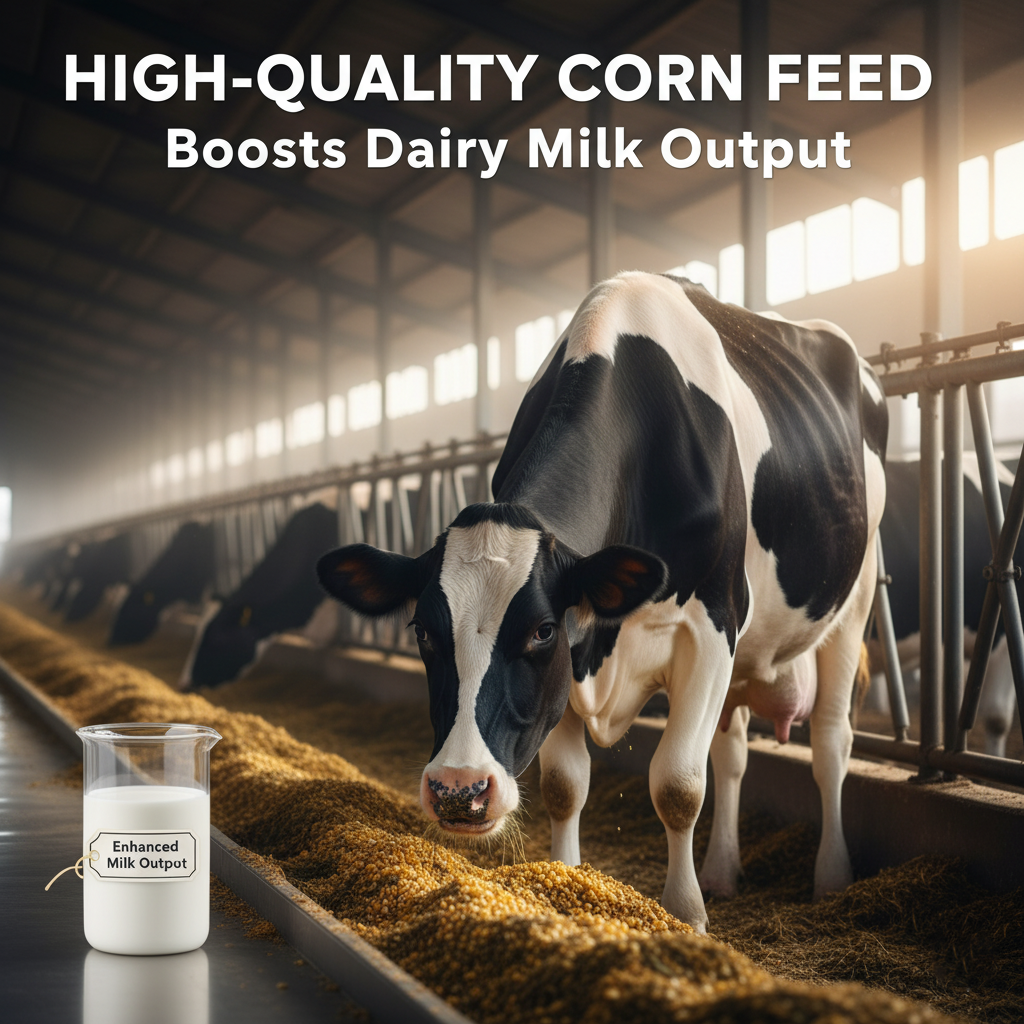
Healthy productive herds are the prime goals of every dairy farmer and animal nutritionist. Genetics, proper herd management, and comfort of the animals are important, but the single most important variable influencing milk production is nutrition. The energy density and digestibility of the feed you offer are directly proportional to its output in the milking parlour.
Optimal nutrition cannot complete the quest of dairy farmers without mentioning one feed ingredient that has become consistent in proving its strength as a powerhouse of energy: the high-quality corn feed. What really does this staple grain translate into increase in milk production? It’s not filling a cow’s stomach; it’s delivering the right kind of energy, at the right time, to fuel the complex biological engine of lactation.
This guide will investigate the science of premium corn feed’s direct effect on milk yield. Energy’s relationship with lactation will be analyzed. The unique features of corn’s starch profile will be given attention. Finally, the most salient quality indicators will be highlighted, differentiating standard feed from strategic investments in your herd’s productivity and your farm’s profitability.
The Engine of Lactation: A Cow’s Energy Budget
So, a high-producing dairy cow is a world-class athlete. Such lexical content is implied in her maintenance: everything – breathing, digestion and movement – will demand an incredible amount of energy, beyond the energy she needs for maintenance; there must also be provision for her requirement for growth, reproduction, and, indeed, the most demanding of all, milk production.
Milk contains lactose (milk sugar), fat and proteins, all of which the cow must synthesize; of course this is an energy-consuming process, requiring glucose as its main feed material, and this energy is mainly derived from digestion of starch and fiber in the rumen.
When a cow’s diet is deficient in net energy for lactation (NEL), then the body will make a choice. It will preserve essential life functions, frequently at the expense of milk production. In fact, milk yield will decrease, body condition will decline and the reproductive health may be compromised. This brings been to the stark realization that the most crucial strategy to harvest optimal effort in milk yield is to maintain a consistent, dense and very digestible energy source.
Why Corn Feed Is Superior Energy Source
There’s certainly much to provide in energy for feed, but corn somehow knows its special fit in supporting lactation in dairy cows given how it’s composed and how it interacts with rumen microbiome.
1. All Starch Digestions Cannot Be Equal
The major source of energy in corn is starch. But, most different starches are not alike. Starch in corn is highly digestible in the rumen, but at a controlled rate. The rumen’s microorganisms ferment this starch into volatile fatty acids (VFAs), mostly propionate, after which it is absorbed and taken to the liver, where it is efficiently converted into glucose-the direct precursor for lactose synthesis in the udder. More lactose leads the udder to draw in more water, directly increasing milk volume.
Cows consume feeds with poorly digestible starch that pass through her body but would give little to no potential for energy. The digestibility of quality corn feeds guarantees that full potential energy taken in will be converted into the fuel for milk production.
2. The Best Density of Energy:
Corn feeds boast one of the highest values of net energy for lactation (NEL) among common feed grains. For every kilogram of dry matter consumed, corn can produce more energy for milk production than, say, barley or oats. This density is vital because the feed intake capacity of a cow is limited. Feeding her as much energy as possible would be crucial at peak lactation, and the feed must be as energy-dense as possible. The amount of energy density the diet will have can be significantly elevated by adding high-quality corn feed into a Total Mixed Ration (TMR), which ensures that the cow’s intake capacity does not get overloaded.
3. Balancing Fiber and Starch
While starch will fuel most of the energy requirements, effective fiber keeps the rumen healthy and operating correctly. It promotes rumination (chewing the cud), saliva production (which provides buffering for rumen pH), and healthy populations of microbes in the rumen. High-quality corn feed, especially when appropriately processed (e.g., flaked or cracked), provides this energy boost but complements those forages that have silages and hays. It’s the balance that counts. A diet deficient in effective fiber may cause acidosis, while a diet deficient in digestible starch will not support high milk yields. Corn makes the perfect synergy possible–fuels production but supports the digestive system that economies have made possible.
The Business Case: ROI of Quality
Premium corn feed does exactly this that it is not an expense but rather an investment in which clear and measurable returns will be observed.
- Increased Feed Conversion Rate (FCR): More energy and better digestibility imply that more efficient feed is converted into milk by a cow. You produce more liters for each kilogram of feed consumed, which brings down your cost of production per liter.
- Better Herd Health: Properly energized cow has a better verified condition score, has better reproductive performance, is not as prone to metabolic disorders and hence less veterinary costs, and has increased productive lifespan of the animals.
- The High Cost of Low Quality: Conversely, sourcing low-quality, inconsistent corn feed can be disastrous. Mycotoxins present in contaminant sources (notably aflatoxin) are striking in causing wastage in milk production and detrimental effects to animal health. Moisture levels and/or particle size can vary inconsistently and lead to disruption of this finely-tuned ration, eventually causing digestive upsets and reducing yields.
Procuring for Success: What You Need to Check with a Supplier
Quality and consistency would be the pillars to unlock benefits. By choosing a corn feed supplier, you are already in collaboration for the successful lead into your farm. Important among these considerations should be:
- Verified Low Aflatoxin Levels: Requires for a Certificate of Analysis (COA) that will show rigorous testing on mycotoxins.
- Consistent Particle Size and Moisture Content: For stable rumen environment continuity, consistency is the key. Your supplier is expected to have stringent quality control to ensure every batch is similar.
- Traceability and Dependability: A trustworthy supplier is able to backtrace their product to the source and has the logistical muscle to guarantee non-stop supply.
Conclusion
The science of increasing milk yield starts by delivering proper fuel. Quality corn feeding, with its compact yet easily digestible energy sources, serves as the fundamental glucose precursor for lactation. It doesn’t only increase milk yield but also maintains overall health in the herd and best manipulates your bottom line. What enhances production and profitability in the dairy industry is a premium, energy-rich nutrition.