
In the world of industrial baking and food manufacturing, flour is the foundational pillar upon which entire product lines are built. For centuries, wheat flour has been the undisputed king, its unique gluten-forming properties creating the structure for everything from lofty breads to delicate pastries. However, a powerful and versatile contender, maize flour (corn flour), offers a unique set of characteristics that make it not just a gluten-free alternative, but a strategic ingredient in its own right.
For R&D professionals, product developers, and industrial bakers, understanding the fundamental differences between these two titans of the flour world is critical. The choice is not simply about swapping one for the other; it’s about leveraging their distinct technical properties to achieve specific, desirable outcomes in the final product.
This technical guide provides a head-to-head comparison of maize flour and wheat flour, breaking down their key differences in protein, starch, flavor, and functionality to help you make the most informed decision for your next formulation.
The Fundamental Difference: Protein and the Gluten Factor
The single most significant distinction between wheat and maize flour lies in their protein composition.
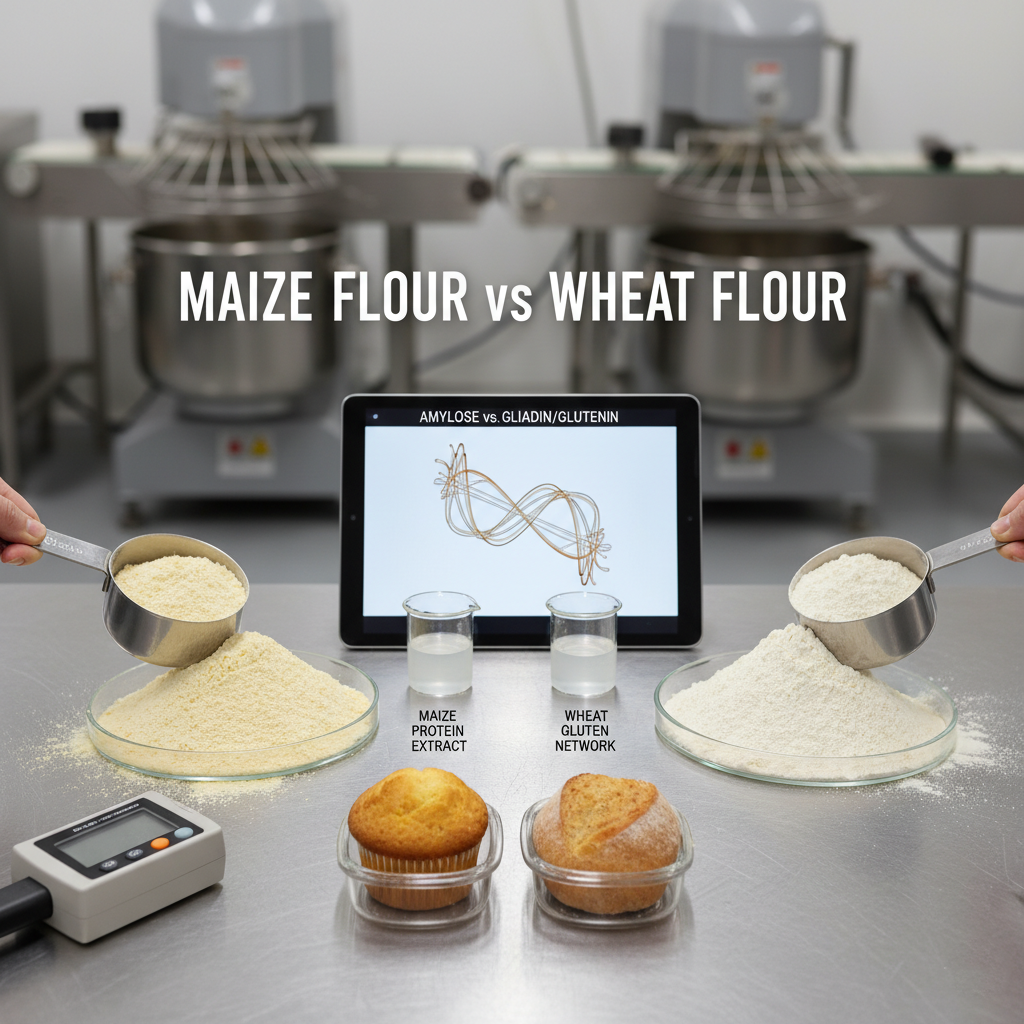
- Wheat Flour: The proteins in wheat, primarily glutenin and gliadin, are unique. When hydrated and mixed, they form an intricate, elastic network called gluten. This network is what gives wheat-based dough its strength and elasticity. It traps the carbon dioxide gas produced by yeast or chemical leaveners, allowing the dough to rise and creating the light, airy, and chewy structure of traditional breads and cakes. The percentage of protein determines the flour’s strength, from high-protein bread flour to low-protein cake flour.
- Maize Flour: Maize flour contains proteins (primarily zein), but these proteins do not form gluten. This is its most defining characteristic. A dough made from 100% maize flour will not have the same viscoelastic properties as a wheat dough. It will be more crumbly and dense, as it lacks the protein web to trap leavening gases. This makes it the go-to choice for gluten-free products and is also responsible for the tender, “short” texture it can impart in other baked goods.
Starch Profile and Gelatinization
Both flours are predominantly composed of starch, but their starch granules behave differently, impacting texture and moisture.
- Wheat Flour: Wheat starch gelatinizes (swells and absorbs water when heated) at a relatively moderate temperature. The presence of the gluten network supports the starch structure, leading to the familiar soft crumb of a baked loaf.
- Maize Flour: Maize starch has a higher gelatinization temperature. This property is key to its functionality as a thickener in sauces and gravies. In baking, it contributes to a finer, more tender crumb structure in cakes and biscuits. In batters and coatings, its starch profile helps create a distinctly crispy texture when fried, as it absorbs less oil than wheat flour.
Water Absorption and Dough Rheology
How a flour interacts with water is critical for industrial processing, affecting mixing times, dough handling, and final moisture content.
- Wheat Flour: The gluten network in wheat flour allows it to absorb a significant amount of water, creating a cohesive and workable dough that can stand up to the rigors of industrial mixers, sheeters, and molders.
- Maize Flour: Without gluten, maize flour absorbs water differently, creating a batter or a less-cohesive dough. Its hydration capacity is generally lower than wheat flour’s. When used in conjunction with wheat flour, it can reduce the overall water requirement and alter the final dough’s handling properties.
Flavor and Color Profile
The sensory contributions of each flour are distinct and serve different culinary purposes.
- Wheat Flour: Has a relatively neutral, subtly nutty, or earthy flavor that provides a familiar backdrop for other ingredients. Its color ranges from creamy white to light tan.
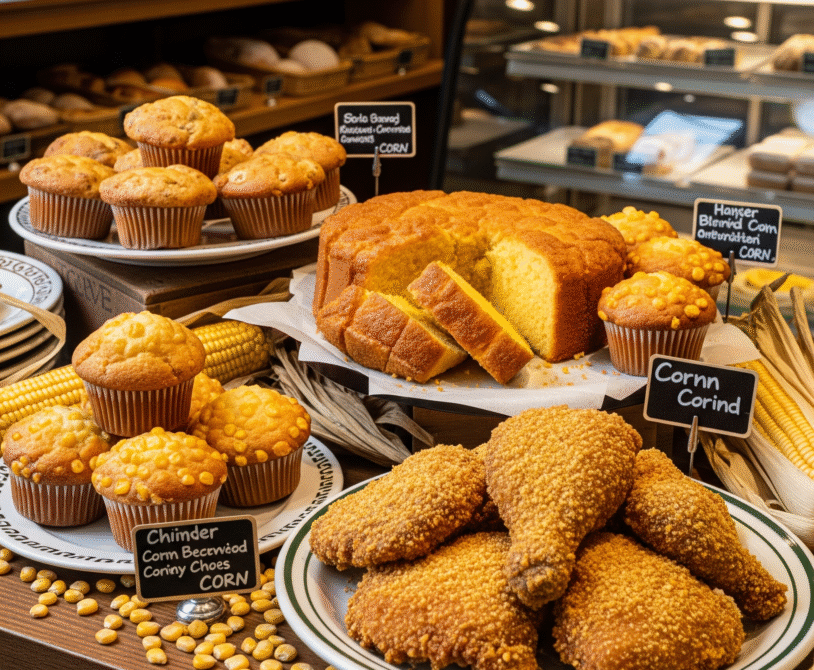
- Maize Flour: Has a more pronounced, slightly sweet, and distinctly “corny” flavor. Its color is a vibrant golden yellow (for yellow maize) or a creamy white (for white maize), which can significantly impact the final product’s appearance, often lending a rich, appetizing hue.
Application-Specific Showdown: Where Each Flour Excels
| Application | Wheat Flour (The Choice For…) | Maize Flour (The Choice For…) |
| Leavened Breads | Providing the essential gluten structure for a light, airy, and chewy crumb. Non-negotiable for traditional loaves. | Gluten-free breads (blended with other starches/binders), or as a minor ingredient in wheat bread for color and flavor. |
| Cakes & Biscuits | Creating the classic structure of most cakes. Lower protein varieties (cake flour) are used for tenderness. | Creating an exceptionally tender, fine crumb in shortbreads and cakes. Adds a pleasant golden color and subtle sweetness. |
| Batters & Coatings | Forming a standard, often softer, coating for fried foods. | Creating a superior, crispy, and crunchy coating that absorbs less oil, ideal for fried chicken, fish, and vegetables. |
| Thickening Agents | Used to make a roux for classic sauces (béchamel), but can sometimes impart a “pasty” flavor if not cooked properly. | A purer thickening agent (cornstarch), creating clear, smooth gravies and sauces without a pronounced floury taste. |
| Gluten-Free Products | Not applicable. | The foundational ingredient for a vast array of gluten-free baked goods, snacks, and cereals. |
Conclusion
The choice between maize flour and wheat flour is not a matter of which is “better,” but which is the right tool for the job. Wheat flour remains the indispensable engine for traditional leavened baked goods, thanks to its miraculous gluten. However, maize flour offers a world of opportunity. It is the key to the entire gluten-free market, the secret to a superior crispy texture, a tool for creating a more tender crumb, and a source of unique flavor and color.
For the modern food manufacturer, mastering the strengths of both is essential. By understanding their distinct technical profiles, you can innovate with confidence, solve complex formulation challenges, and deliver the specific textures and flavors that today’s consumers demand.